
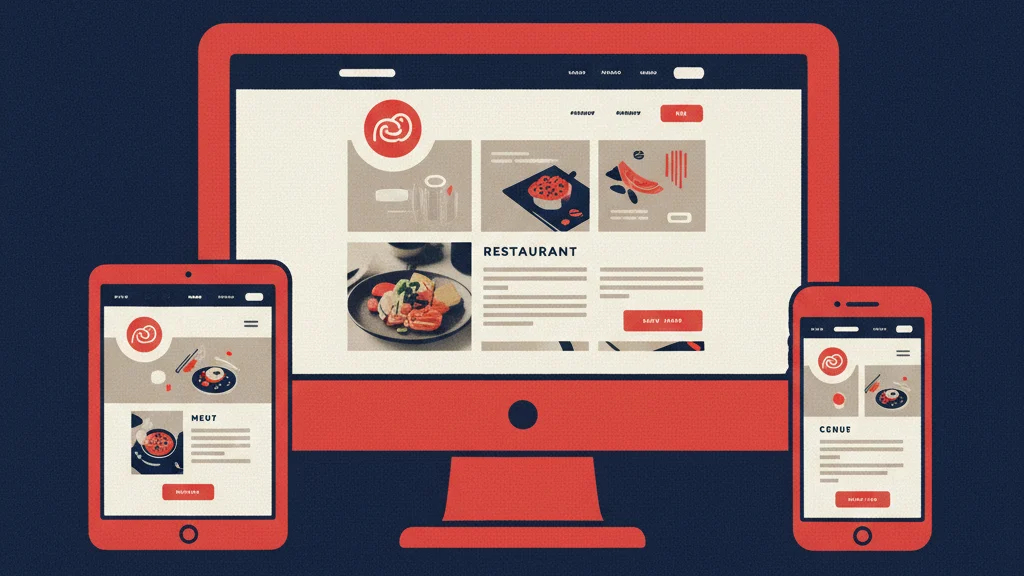
A restaurant website has one job: turn a curious visitor into a paying customer. Not impress other designers. Not win awards. Convert.
The best restaurant website designs in 2026 understand this. They’re fast, visual, mobile-first, and ruthlessly focused on the actions that drive revenue — viewing the menu, placing an order, booking a table, getting directions. Every design decision either supports those actions or gets in the way of them.
This guide breaks down what separates top restaurant website design from average, by restaurant type and by the specific elements that determine whether a visitor becomes a customer or bounces to a competitor.
Why Restaurant Website Design Matters More Than Ever in 2026
The numbers tell the story:
- 89% of guests research a restaurant online before visiting or ordering. Your website is the first impression for the overwhelming majority of new customers.
- 72% of restaurant searches happen on a smartphone. Your mobile design is your primary design.
- 61% of users immediately leave a site that isn’t mobile-friendly — taking their order elsewhere.
- 45% of restaurant website visitors are looking for food photos first. If you don’t have them, you’ve already lost nearly half your audience before they read a word.
- Every additional second of load time increases order abandonment by 7%. A 4-second load time versus a 1-second load time can cost a restaurant thousands of dollars in monthly revenue.
Restaurant website design isn’t a branding exercise. It’s a revenue decision.
The 7 Principles of Top Restaurant Website Design
1. Mobile-First, Always
In 2026, designing a restaurant website for desktop first is designing it for the wrong audience. More than 70% of your visitors are on their phones — likely hungry, nearby, and making a decision in under two minutes.
Top restaurant website design is built mobile-first: large tap targets, thumb-friendly navigation, readable text without zooming (minimum 16px), one-tap click-to-call, and an ordering or reservation button visible above the fold without scrolling. Desktop is a secondary consideration, not the primary canvas.
Restaurants with mobile-optimized sites see 40% higher conversion rates than those with desktop-first designs that are “responsive” as an afterthought.
2. Food Photography That Sells
Food photography is the highest-ROI design element on any restaurant website. Not stock photos — your actual dishes, photographed professionally, showing accurate color, texture, and plating.
Photo-based menus convert 25% more customers than text-only alternatives. Menus with photos generate up to 44% more monthly sales. A Google survey found that customers consider food photos 1.44x more important than menu descriptions when deciding where to eat.
Top restaurant website design treats food photography as infrastructure, not decoration. Every hero section, every menu item, every featured dish section is built around compelling visuals that make the food impossible to scroll past.
3. Zero-Friction Navigation
A visitor who can’t find what they’re looking for within five seconds will leave. The most common things restaurant website visitors want, in order: menu, hours, location, phone number, online ordering or reservations.
Top restaurant website design puts all five within one tap from the homepage. A sticky navigation bar keeps key actions accessible as visitors scroll. Footer always includes address, hours, and phone number. Menu is never a PDF — it’s a live, scrollable, searchable HTML page.
Every additional click between “I’m interested” and “order placed” costs you conversions. The best-designed restaurant websites minimize that path to the absolute minimum.
4. Conversion-Engineered Menus
The menu page is the most critical page on any restaurant website. Yet it’s also the most frequently neglected — stuffed into a PDF upload or a plain text list with no photos, no structure, and no ordering capability.
Restaurants that switch from PDF to digital HTML menus see up to 58% more completed orders. What makes a menu page perform:
- Individual item photos for top sellers
- Short, appetizing descriptions that use search-relevant language
- Scannable dietary tags (GF, vegan, spicy, etc.)
- Category anchors so visitors can jump to what they want
- “Add to order” buttons that flow directly into checkout — on your domain, not a third-party redirect
- Mobile layout that scrolls naturally, loads instantly, and doesn’t require pinching
5. Speed as a Design Requirement, Not an Afterthought
Page speed is not a developer problem. It’s a design problem. Heavy fonts, uncompressed images, video autoplay, excessive animations, third-party scripts — these are design decisions that kill performance.
Top restaurant website design treats load time as a primary design constraint. Every visual element is optimized for delivery speed. Images are compressed and served in modern formats (WebP). Fonts load without layout shifts. Above-the-fold content renders in under a second.
The benchmark: a PageSpeed score of 90+ on mobile, sub-2 second full load. Anything below 70 is actively hurting your Google rankings and losing you customers before they see a single photo.
6. Brand Identity That Builds Trust
Design communicates more than information — it communicates trust. A restaurant website that looks outdated, inconsistent, or cheaply built signals the same thing about the food and experience, whether that’s accurate or not.
Top restaurant website design reflects the actual dining experience: fine dining restaurants use restrained typography, whitespace, and muted palettes; pizza and casual restaurants use bold colors, action-forward CTAs, and energetic layouts; fast-casual brands use clean, modern UI with strong photography and fast ordering flows.
The design shouldn’t try to be everything to everyone. It should be unmistakably and immediately clear what kind of restaurant this is and who it’s for.
7. SEO and AI Search Built Into the Structure
Beautiful restaurant websites that no one can find are expensive marketing failures. Top restaurant website design in 2026 builds SEO and AI search readiness into the architecture — not bolted on after launch.
This means: clean URL structures, proper heading hierarchies (H1 → H2 → H3), schema markup for Restaurant, Menu, and LocalBusiness entities, location pages for multi-unit operators, and content structured to answer the conversational queries AI tools like ChatGPT and Gemini are surfacing to your potential customers right now.
Top Restaurant Website Design by Restaurant Type
Fine Dining & Upscale
The design hallmarks of top fine dining restaurant websites: full-bleed photography, restrained color palettes (often black, white, and one accent), editorial typography, minimal navigation, and storytelling that communicates the chef’s vision or the sourcing philosophy.
The best fine dining sites feel like a preview of the experience — unhurried, curated, and confidence-inspiring. Reservations are the primary CTA, and the booking flow is seamless. Menu PDFs are replaced by elegantly formatted digital menus that don’t break the aesthetic.
Performance requirement: Fine dining guests are high-intent and higher-spend. A slow or broken site damages the brand credibility you’ve spent years building. PageSpeed still matters — it just needs to coexist with high-resolution imagery delivered efficiently.
Fast Casual & Neighborhood Restaurants
Fast casual restaurant websites should feel as fast as the dining experience. Bold hero photos, a visible “Order Now” button above the fold, and a clean menu organized by category. The goal is to get a hungry visitor from landing to order confirmation in under 60 seconds.
Loyalty program sign-ups, location finders for multi-unit brands, and social proof (Google review counts, press mentions) are high-converting elements that top fast casual sites incorporate into the design without cluttering the primary conversion path.
Performance requirement: This audience is often mobile-ordering in real time. Sub-1 second load time is the target. PDF menus are disqualifying.
Pizza & Delivery-Forward Restaurants
For delivery-first restaurants, the website IS the restaurant for a large percentage of customers. Top pizza and delivery restaurant website designs put the ordering flow front and center — often accessible from the homepage hero with a single button tap.
High-converting elements: prominent delivery radius or zip code entry, real-time order tracking integration, deal callouts (specials, combo offers) visible before customers reach the menu, and social proof that reinforces fast delivery and quality.
Performance requirement: Commission elimination is the highest-ROI design goal for delivery restaurants. Every visitor who orders through your website instead of DoorDash or Grubhub saves you 20–30% per order. The design must make direct ordering easier than the third-party alternative.
Multi-Location Restaurant Groups
Multi-location restaurant websites have a unique design challenge: they need to serve both brand-level visitors (who want to know what the group is about) and location-level visitors (who want hours, menus, and ordering for a specific restaurant).
Top multi-location designs include a clear location selector on the homepage, individual location pages with full SEO optimization for each market, consistent branding with location-specific content, and unified ordering infrastructure that doesn’t fragment the customer experience.
Performance requirement: Each location page needs to rank in its own local market. This requires individual page optimization — not just a single page with a location dropdown.
The Performance Layer: Why Design Without Speed Fails
Here’s the uncomfortable truth about restaurant website design: a beautifully designed site that loads in 4 seconds performs worse — in revenue terms — than a plainer site that loads in 0.9 seconds.
Google’s ranking algorithm uses Core Web Vitals — Largest Contentful Paint (LCP), Interaction to Next Paint (INP), and Cumulative Layout Shift (CLS) — as direct ranking signals. A slow restaurant website, regardless of how it looks, ranks lower in local search, receives less organic traffic, and converts fewer of the visitors it does receive.
The design decisions that most commonly kill restaurant website performance:
- Uncompressed, full-resolution food photography served in JPEG instead of WebP
- Third-party reservation widgets (OpenTable, Resy) that load blocking scripts
- Autoplay video in hero sections
- Google Fonts loaded in ways that create layout shift
- Excessive animation libraries
- Unoptimized WordPress themes with bloated CSS and JavaScript
The best restaurant website designers treat performance as a design constraint — making every visual decision with load time and Core Web Vitals in mind from the start, not after launch when the damage is already done.
What Top Restaurant Website Design Looks Like From RICHMENU
Every website RICHMENU builds is designed to the standards outlined in this guide — not as aspirational targets, but as baseline requirements.
The performance benchmarks every RICHMENU site launches with:
- 95–100 PageSpeed score on mobile
- Sub-1 second load time
- 100% mobile-first, thumb-optimized design
- Full schema markup for Restaurant, Menu, and LocalBusiness
- A+ technical SEO architecture from day one
- Commission-free ordering integration (Zuppler, Toast, and others)
- Custom WordPress — you own the code, the data, and the design
The design is restaurant-specific — built around your brand, your menu, and your customers — not adapted from a general-purpose template. And because it’s custom WordPress, it’s fully portable: if you ever change providers, your website, your content, and your customer data come with you.
Real results from restaurants that moved to RICHMENU-built sites:
- PageSpeed: 47 → 98
- Load time: 4.2 seconds → 0.9 seconds
- Organic traffic: +35%
- Online orders: +22%
Frequently Asked Questions
What makes a great restaurant website design?
A great restaurant website design combines mobile-first UX, professional food photography, zero-friction navigation, a conversion-optimized menu page, fast load times (PageSpeed 90+), and SEO structure built into the architecture. The goal is not aesthetics alone — it’s turning visitors into customers as efficiently as possible.
How much does restaurant website design cost?
Restaurant website design costs vary significantly based on scope and quality. Template-based builds on SaaS platforms typically run $200–$500/month with limited customization. Custom-designed restaurant websites built on WordPress range from $5,000–$15,000 as a one-time investment, plus a monthly management and hosting fee. Custom builds deliver significantly better performance, SEO, and conversion outcomes — and you own the asset outright.
What should a restaurant website include?
Every restaurant website should include: a mobile-optimized homepage with clear CTAs, an HTML-based menu (not a PDF) with food photography, online ordering or reservation capability, location and hours prominently displayed, click-to-call phone number, Google Maps integration, structured data markup, and a Google Business Profile link. These are baseline requirements, not premium features.
How important is page speed for restaurant websites?
Extremely important. Every additional second of load time increases order abandonment by 7%. Page speed is also a confirmed Google ranking factor — slow restaurant websites rank lower in local search, receive less organic traffic, and convert fewer visitors. The target is a PageSpeed score of 90+ on mobile and a load time under 2 seconds.
Should restaurant websites use a template or custom design?
For restaurants serious about performance, SEO, and conversion, custom design on a portable platform (like WordPress) outperforms template-based SaaS solutions in every measurable way: speed, customization, SEO control, data ownership, and long-term ROI. Templates are a starting point — not a competitive advantage.
What is the best platform for restaurant website design?
Custom WordPress is the best platform for restaurant website design that prioritizes performance and ownership. It offers full design flexibility, superior SEO control, portability (you own the site), and compatibility with any ordering or reservation system. SaaS platforms like Squarespace, Wix, or restaurant-specific tools offer faster setup but sacrifice performance, customization, and data ownership.