
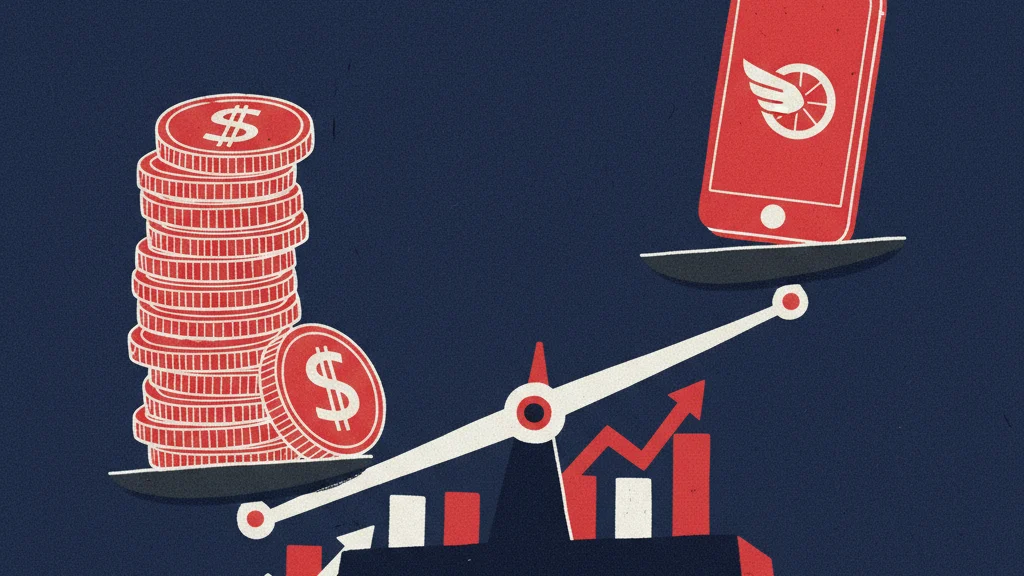
Every restaurant owner using DoorDash, Uber Eats, or Grubhub knows something feels wrong about the economics. You’re doing the cooking. You’re paying the staff. You’re buying the ingredients. And somewhere between 15% and 30% of every order — sometimes more — leaves your business before you’ve even covered your costs.
The platforms make the fee structure intentionally difficult to total. Commission percentages, payment processing fees, marketing fees for better placement, delivery fee subsidies during promotions — each charge is framed separately, in different parts of the dashboard, in different reports. Most restaurant owners know roughly what they’re paying but haven’t sat down to calculate what that number is per year, at their actual order volume.
This post does that math. Transparently, specifically, and at multiple order volumes — so you can see exactly what delivery app fees are costing your restaurant and what those dollars represent as a share of your actual margin.
How Delivery App Fee Structures Actually Work
The headline commission rate is not the complete cost. Here’s what you’re actually paying:
Commission on order subtotal
The primary fee — charged as a percentage of the food order value (before tax and tip). Current rates:
- DoorDash: Basic plan 15%, Plus plan 25%, Premier plan 30%. Most restaurants are on Plus or Premier to access delivery and marketing features.
- Uber Eats: 15–30% depending on plan, market, and negotiated rate. Most independent restaurants pay 27–30%.
- Grubhub: 5–20% commission plus mandatory marketing fee of 10–20% if you want your restaurant to appear in search results. Effective rate: 15–30%.
Payment processing fee
Charged on top of commission — typically 2.9–3% of the transaction. On a $50 order already paying 25% commission, this adds another $1.45. It’s small per order and significant annually.
Marketing and placement fees
Paying commission doesn’t get you visibility in search results — that’s a separate cost. DoorDash’s “Sponsored Listings,” Uber Eats’ “Ads,” and Grubhub’s mandatory marketing fee (built into their plans) all add percentage points on top of base commission. Restaurants that opt out of these programs typically see significant drops in order volume — which is how the platforms ensure participation.
Delivery fee subsidies
During DashPass promotions and platform-wide deals, platforms sometimes reduce delivery fees for consumers and pass part of the cost to restaurants. This appears in your reports as a “promotion charge” and is easy to miss.
Tablet and equipment fees
Smaller but real — DoorDash and Uber Eats tablet fees ($6–$25/month each), equipment costs, and integration fees if you’re connecting to a POS system.
The Real Annual Cost: What Delivery App Fees Add Up To
Using a blended effective rate of 27% (commission + processing + placement — the realistic all-in rate for most independent restaurants on DoorDash or Uber Eats):
| Monthly Platform Orders | Monthly Fees (27%) | Annual Fees | At 5% Net Margin, Equivalent to Losing… |
|---|---|---|---|
| $5,000/month | $1,350/month | $16,200/year | $324,000 in revenue |
| $10,000/month | $2,700/month | $32,400/year | $648,000 in revenue |
| $20,000/month | $5,400/month | $64,800/year | $1.3M in revenue |
| $40,000/month | $10,800/month | $129,600/year | $2.6M in revenue |
| $75,000/month | $20,250/month | $243,000/year | $4.9M in revenue |
The “equivalent revenue” column uses the industry average net margin of 5%. At 5% net margin, you need to generate $20 in revenue to net $1. When you pay $16,200 in platform fees, recovering that in net income requires generating an additional $324,000 in revenue. Most restaurants would need years to grow their way to that number — it would take one competent direct ordering strategy to eliminate it instead.
And this is before accounting for what those platforms don’t give you in return.
What Delivery App Fees Buy — and What They Don’t
What you’re paying for
- Discovery: New customers who find you through the platform’s marketplace and order for the first time
- Logistics: Driver network, delivery tracking, and customer support for delivery orders
- Order management: The tablet interface, order routing to kitchen, and basic analytics
What you’re not getting
- Customer data: You don’t know who ordered. The platform owns the customer’s name, email, order history, and contact information. You can’t re-market to them, build a loyalty relationship, or reach them when you have a promotion.
- Repeat order economics: When a customer who already knows your restaurant orders through DoorDash, you pay 27% for an order you didn’t need the platform to generate. That’s loyalty revenue being taxed by a middleman.
- Brand control: The customer experience — app design, driver interaction, packaging handling — is controlled by the platform. Your restaurant’s brand is secondary to the platform’s interface.
- Pricing control: Many platforms require or pressure restaurants to maintain the same prices as in-store. Some restaurants raise menu prices on platforms to compensate, which creates inconsistent brand perception.
The fundamental economic problem: delivery platforms charge the same 27% whether they introduced you to a brand-new customer (genuine value) or whether a loyal regular who’s ordered from you 20 times decided to use the app for convenience (no incremental value). The fee is indiscriminate. The value isn’t.
The Repeat Customer Math: What You’re Paying for Orders You Already Earned
Research consistently shows that 60–75% of delivery app orders come from customers who already know the restaurant — they searched by name, they reordered, they chose based on a previous experience. These are not discovery orders. These are loyalty orders being processed through a platform that charges discovery rates.
At a restaurant doing $20,000/month in platform orders:
- 60–75% repeat customers = $12,000–$15,000/month in orders from people who already know you
- At 27% commission = $3,240–$4,050/month in fees on orders you didn’t need the platform to generate
- Annually = $38,880–$48,600/year paid to platforms for repeat customer orders
This is the most recoverable portion of platform fees. Repeat customers order directly when given a frictionless way to do it — which is a well-designed, fast-loading restaurant website with a commission-free ordering integration.
The Direct Ordering Alternative: What Shifting 40% of Orders Is Worth
You don’t need to eliminate delivery platforms to materially change your economics. Shifting a portion of repeat-customer orders to direct changes the math significantly.
| Monthly Platform Orders | 40% Shifted to Direct | Annual Recovery (at 27% avg) | Net after $495/mo direct ordering costs |
|---|---|---|---|
| $10,000 | $4,000 direct | $12,960/year saved | $7,020/year net recovered |
| $20,000 | $8,000 direct | $25,920/year saved | $19,980/year net recovered |
| $40,000 | $16,000 direct | $51,840/year saved | $45,900/year net recovered |
| $75,000 | $30,000 direct | $97,200/year saved | $91,260/year net recovered |
These figures assume a $495/month direct ordering website management cost and 0% commission on direct orders. The net recovery at even modest order volumes makes the investment straightforward to justify.
How to Shift Repeat Customers to Direct Ordering
The mechanics are simple. Execution requires consistency:
Package insert with every delivery order
A card or sticker in every bag: “Order direct at [your website] and get [incentive — a free item, loyalty points, a small discount]. Skip the app, support us directly.” QR code that goes straight to your ordering page. This converts every platform delivery into a direct ordering acquisition opportunity.
Update your Google Business Profile ordering link
The “Order Online” button on your Google Maps listing defaults to a delivery platform if you let it. Change it to your direct ordering page. Every customer who finds you on Google Maps and wants to order is routed to your website instead of DoorDash — commission-free.
Add direct ordering to your Instagram and Facebook bio
Your social media following is your warmest audience. Replace the DoorDash link in your bio with your direct ordering URL. Anyone motivated enough to check your social profile is motivated enough to order directly.
Text or email existing customer list
If you have any customer contact information — from a loyalty program, reservations, or past direct orders — a single campaign announcing direct ordering with a first-order incentive converts a meaningful portion immediately.
Train staff to mention direct ordering
For restaurants with takeout windows or phone orders: staff mentioning “you can also order directly on our website and save [incentive]” converts a portion of every phone interaction into a direct ordering customer going forward.
Should You Leave Delivery Platforms Entirely?
For most restaurants: no — and a gradual shift strategy outperforms a cold exit.
Delivery platforms do provide genuine discovery value for new customers. Leaving entirely means losing that channel, which is a real cost — particularly for restaurants in competitive markets where platform search drives meaningful first-time customer acquisition.
The optimal strategy for most restaurants:
- Stay on platforms for discovery — new customers finding you for the first time through marketplace search
- Actively convert repeat customers to direct — package inserts, GBP ordering link, social media, email/SMS campaigns
- Reduce platform marketing spend — once you have a strong direct ordering channel, reduce or eliminate paid placement within the platform
- Use platform data to identify your most loyal platform customers — then target them specifically for direct ordering conversion
This hybrid approach recovers the highest-margin portion of platform revenue (repeat customers) while maintaining the genuine discovery benefit that platforms provide.
How RichMenu Builds the Infrastructure for Direct Ordering
Every website RichMenu builds is engineered to make direct ordering the default channel for repeat customers:
- Sub-1-second mobile load time — fast enough that customers don’t revert to the delivery app out of impatience
- Commission-free ordering integration — 0% per-order commission through direct POS integration or flat-fee ordering platforms
- Order Now as the primary homepage CTA — visible above the fold on mobile, one tap away from starting an order
- Google Business Profile ordering link pointed at your direct page — capturing Maps traffic as commission-free orders
- Customer data ownership — every direct order builds your customer database, enabling re-marketing and loyalty campaigns that platforms never allow
The combined effect: a restaurant that shifts 40% of its platform orders to direct within 12 months of launch — recovering tens of thousands of dollars in annual commission that previously left with every order.
See how RichMenu builds the direct ordering infrastructure for restaurants →
Frequently Asked Questions
How much does DoorDash charge restaurants per order?
DoorDash charges restaurants 15–30% commission per order depending on plan: Basic (15%), Plus (25%), and Premier (30%). Most restaurants use Plus or Premier to access delivery services and marketing features. Add payment processing fees (2.9–3%) and optional placement/marketing costs and the effective all-in rate is typically 25–30% of order value for most independent restaurants.
How much does Uber Eats charge restaurants in commission?
Uber Eats charges 15–30% commission per order, with the rate depending on plan, market, and any negotiated rates for higher-volume restaurants. Most independent restaurants pay 27–30%. Like DoorDash, payment processing fees (2.9–3%) are charged on top of commission, and paid placement within the app is an additional cost.
Is DoorDash worth it for restaurants?
DoorDash is worth it for genuine new customer discovery — orders from customers who wouldn’t have found you otherwise. It’s not worth it for repeat customer orders, which typically represent 60–75% of platform volume and carry no incremental discovery value. The right approach for most restaurants is to maintain platform presence for discovery while actively converting repeat customers to direct ordering, which eliminates the 27%+ commission on loyalty revenue.
How can restaurants reduce delivery app fees?
The most effective strategies: build a direct ordering channel and convert repeat customers away from platforms (package inserts with QR codes, GBP ordering link updates, social media links to direct ordering); negotiate a lower commission tier with platforms if you have meaningful volume; reduce or eliminate paid placement fees within platforms once direct ordering is established; and stay on the lowest-tier plan that maintains acceptable order volume from each platform.
What percentage do delivery apps take from restaurants?
The all-in effective rate including commission, payment processing, and placement fees is typically 25–30% for most independent restaurants on DoorDash or Uber Eats. Grubhub’s structure includes a mandatory marketing fee that makes direct cost comparison complex, but effective rates are similarly in the 20–30% range. At 27% all-in, a restaurant doing $20,000/month in platform orders pays $64,800/year in platform fees.
What is the best alternative to DoorDash for restaurants?
For direct ordering, commission-free platforms include ChowNow ($119–$328/month flat fee, 0% commission), Flipdish, and direct ordering integrations built into POS systems like Toast, Square, and SpotOn. The flat monthly fee model replaces per-order commissions with a fixed cost — recovering commission fees at any meaningful order volume. Combining a direct ordering platform with a fast, well-optimized restaurant website is the infrastructure required to shift repeat customers away from third-party apps.